Outdoor safety planning doesn’t have to be complicated
You don’t need a tactical backpack, a thousand-dollar watch, or a personality built around “the outdoors” to be safer outside.
You just need a plan that matches the kind of outside you actually do.
For most people, that’s not a week-long expedition. It’s a short hike on a weekend. A camping trip with the kids. A quiet walk in a reserve you’ve been to a dozen times. A quick “we’ll be back before dark” kind of outing that feels harmless—until one small thing goes sideways.
And that’s the key: outdoor problems usually don’t begin with drama. They begin with something ordinary.
Most outdoor problems don’t start as emergencies — they start as small things without margin.
- Your phone drops to 3% because you were filming the waterfall.
- The weather shifts faster than you expected.
- Someone turns an ankle in a spot with no reception.
- You take the wrong trail for “just ten minutes” and suddenly everything looks the same.
This article is for beginners—not in the sense of “you don’t know anything,” but in the sense of “you want a simple system you can repeat.” Something you can run through in your head while you’re packing, so your outing stays enjoyable instead of stressful.
You’ll see three real-life scenarios. Each one is written the way these moments actually feel: normal… until they aren’t. And each one will show you how to plan in a way that doesn’t kill the vibe. It just removes the fragility.
Because the goal of outdoor safety planning isn’t to turn you into a different person.
It’s to make sure the person you already are—partner, parent, solo wanderer, casual hiker—can handle the “small bad stuff” without panic, without guesswork, and without relying on luck.
We’ll focus on actions first, gear second. And where products can help, they’ll be there to support the plan—not replace it.
Let’s start with the most common beginner mistake: heading out with a good mood… and no real margin. 🙂
Scenario 1: “It’s just a short walk — we don’t need much”
The kind of plan that feels too small to need planning
This is how most beginner outdoor plans start.
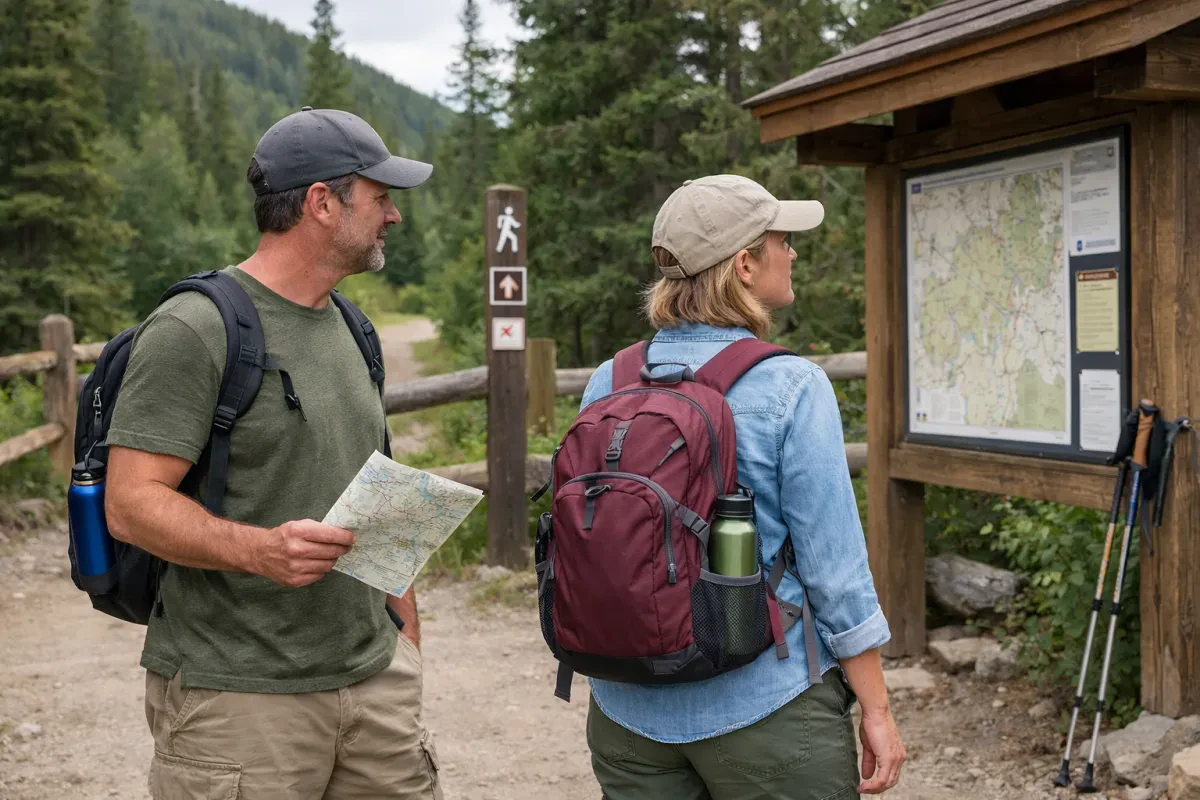
You’re heading out for something simple. A short hike. A loop trail you’ve seen recommended online. Maybe a local reserve you’ve been to before. The kind of outing that doesn’t feel like it deserves a checklist.
You throw on comfortable clothes. Grab your phone. Maybe a water bottle if you remember. The weather looks fine. You’ll be back before lunch.
Nothing about the plan feels risky.
And that’s exactly why people get caught out.
If a plan feels too small to matter, it usually has the least room for error.
When everything feels normal… until it doesn’t
About thirty minutes in, things still feel normal. You’re chatting, taking photos, enjoying being outside. The trail narrows a bit. The shade changes. The breeze cools off. It’s pleasant enough that you don’t notice the quiet shifts happening around you.
Then one small thing changes.
Someone realizes they’re thirstier than expected. Another person checks their phone and sees the battery is lower than it should be. The trail sign you were expecting doesn’t appear where you thought it would. None of these are emergencies on their own—but together, they start to tighten the margin.
The slow creep of “we’ll just keep going”
Beginners often think outdoor safety planning is about big dangers. Snakes. Weather disasters. Getting “lost lost.”
In reality, most problems start with inconvenience stacking.
You hesitate before turning back because you’ve already come this far. You assume reception will come back any minute. You don’t want to be the one who overreacts. So you keep walking, hoping the situation improves instead of adjusting the plan.
This is the moment where a simple framework makes all the difference. 🧭
Good planning happens before the walk feels uncomfortable.
Three quiet questions that create real margin
Before you even leave the car, good beginner planning answers three quiet questions:
- What would make us turn around early?
- What are we relying on that could fail?
- What’s our buffer if something small goes wrong?
Notice how none of those questions are dramatic. They’re practical. They’re about margin.
For a short outdoor walk, margin usually comes from boring things:
- More water than you think you’ll need
- A fully charged phone plus a backup power option
- A basic idea of the trail layout before you arrive
- A clear “turnaround point” agreed on in advance
Actions first, gear second
When beginners skip these steps, they don’t feel reckless. They feel efficient. But efficiency without margin is fragile.
Planning doesn’t mean packing heavy gear or memorising maps. It means reducing the number of decisions you’ll have to make when you’re already tired, hungry, or unsure.
This is where situational awareness quietly matters. Not in a tactical way—just in a human one. Being aware of how far you’ve gone, how everyone is feeling, and how conditions are changing lets you course-correct early instead of reacting late. We break that mindset down more fully in our guide to situational awareness habits in public spaces, and the same principles apply outdoors.
Authority safety groups emphasize this kind of basic planning because it prevents escalation. According to the National Park Service, many search and rescue callouts begin with short, familiar outings where visitors underestimated time, terrain, or supplies—especially on “easy” trails. Simple preparation dramatically reduces those incidents. Source.
The goal here isn’t to be perfect. It’s to be resilient.
When you plan for the walk you’re actually taking—not the one you imagine—you give yourself permission to turn around without frustration, to pause without stress, and to enjoy the day without constantly checking whether things are about to go wrong.
Outdoor safety planning for beginners starts right here: accepting that even easy plans deserve a little structure, so they don’t fall apart when conditions stop being ideal.
Scenario 2: The weather turns faster than you expected
When the forecast looked fine… and the sky disagrees
This is the moment that catches a lot of beginners off guard—not because they ignored the forecast, but because they trusted it too much.
You checked the weather before leaving. It looked fine. Mild temperatures. Low chance of rain. Nothing that suggested trouble.
So when the sky starts to change, it feels more like an inconvenience than a warning.
The light dims slightly. The breeze cools. Clouds move in faster than you thought they would. Someone jokes that it feels like rain, but no one is particularly worried yet.
The moment plans split into two paths
This is where outdoor plans quietly split into two paths.
On one path, people notice the change early and adjust without stress. On the other, they wait for certainty—and certainty arrives late.
Weather-related problems outdoors rarely start with storms. They start with hesitation.
When hesitation starts stacking discomfort
You wonder if you’re imagining it. You don’t want to cut the outing short unnecessarily. The forecast didn’t mention this. And besides, turning around now feels like overreacting.
So you keep going.
As conditions shift, small discomforts start stacking up. The temperature drops just enough that someone wishes they’d brought another layer. Wind makes it harder to hear each other. The ground becomes slick in spots. The pace slows, even if no one says it out loud.
For beginners, this is often when decision-making gets fuzzy.
You start thinking in minutes instead of margins. “Let’s just go a bit further.” “It’ll probably pass.” “We’re almost there anyway.”
The problem isn’t optimism—it’s delay. 🌦️
Weather doesn’t need to be dangerous to change the outcome.
Flexibility beats perfect forecasting
Good outdoor safety planning doesn’t require predicting the weather perfectly. It requires assuming that forecasts are approximations, not guarantees.
Experienced planners quietly build flexibility into even short outings:
- They pack one extra layer, even if it feels unnecessary at the start
- They expect the temperature to feel colder once movement slows
- They assume wind will amplify discomfort faster than rain
- They identify sheltered spots along the route without calling them “backup plans”
None of this feels dramatic. It feels boring—until it’s the reason an outing stays manageable instead of stressful.
When the social pressure is “don’t ruin it”
Weather shifts also affect time more than beginners expect. When conditions worsen, people walk slower. Stops last longer. Navigation takes more attention. Suddenly, an outing that felt comfortably short begins to brush up against daylight, energy levels, or return timing.
This is where planning intersects with awareness.
Noticing the environment changing—and how it’s affecting the group—matters more than sticking rigidly to the original plan. That’s why one of the most useful beginner habits is agreeing ahead of time on what counts as a “reasonable reason” to turn back. Cold, wind, visibility changes, or simple discomfort are all valid signals—not failures.
If you’re outdoors with others, this is also a social moment. People hesitate to speak up when they’re uncomfortable because they don’t want to spoil the experience. Clear planning removes that pressure. When everyone knows that adjusting plans is normal, decisions happen earlier and with less friction.
Weather-driven problems don’t need extreme conditions to matter. Even mild exposure can sap energy, increase risk of slips, and make simple mistakes more likely—especially for beginners who aren’t yet used to reading their own limits.
Planning for weather isn’t about fear. It’s about comfort and clarity.
When you carry small buffers—a layer, a dry option, a simple plan for shelter—you give yourself room to enjoy the day without constantly negotiating whether it’s still “worth it” to continue.
This mindset carries over into other preparedness scenarios too. The same calm planning approach applies when conditions change unexpectedly at home, which we explore more deeply in what to do if power goes out for 24–72 hours. The environments are different, but the decision-making principles are the same.
For beginners, outdoor safety planning at this stage is about learning to trust your observations as much as the forecast—and giving yourself permission to adapt before conditions force the issue.
Scenario 3: Someone gets hurt, and it’s no longer just “outdoor time”
When the outing suddenly becomes a situation
This is the moment many beginners never imagine—because it feels too serious for a casual outing.
You’re not far from the trailhead. You’re not deep in the wilderness. Everything has been going smoothly enough that no one feels particularly alert.
Then someone missteps.
It might be a rolled ankle on uneven ground. A slip on loose gravel. A sudden cramp that doesn’t ease after a minute or two. Nothing dramatic happens, but something changes immediately.
The pace stops. Conversation quiets. Attention narrows.
This is where outdoor plans stop being theoretical. 🩹
From this moment on, comfort and clarity matter more than distance.
The urge to rush — even when you shouldn’t
For beginners, the shock isn’t the injury itself—it’s how fast the situation reframes. What was a walk becomes a problem to manage. What felt like free time suddenly has constraints: mobility, distance, energy, and options.
In this moment, people often rush emotionally even if they move slowly physically.
There’s a strong urge to “just get out of here.” To improvise. To push through discomfort because stopping feels worse than continuing. But rushing without a plan is how small injuries become complicated ones.
The questions that matter before you need them
Good beginner planning assumes this possibility without fixating on it.
Before anyone is hurt, planning quietly answers questions like:
- Can we help someone move if they need support?
- Do we know the shortest way back, not just the intended route?
- How would we stay comfortable if progress slowed significantly?
When an injury happens, those answers matter more than gear lists.
Assessment first, action second
The first few minutes are about assessment, not action. How bad is it? Can the person put weight on it? Does pain improve or worsen with rest? Rushing to move without clarity often makes things worse.
This is where simple preparation helps beginners stay calm.
A basic first-aid approach—cleaning a scrape, supporting a joint, adding warmth if someone cools down—buys time. Time to think clearly. Time to decide whether to continue, turn back, or call for help.
Managing the human side of the moment
Equally important is the mental side of the moment.
People often minimize injuries because they don’t want to inconvenience others. Planning ahead removes that social pressure. When everyone knows that safety comes before schedule, the group responds more smoothly.
Navigation also becomes more important here. The way you came in might not be the best way out if someone is injured. Knowing alternative routes, even roughly, reduces stress when movement slows or stops altogether.
This is also where communication matters.
If reception is limited or unreliable, beginners quickly realize how much they rely on their phones. Having at least one backup—whether that’s a power source, a downloaded map, or a shared understanding of where help would come from—keeps the situation grounded instead of panicked.
Outdoor safety planning doesn’t mean expecting rescue. It means understanding how long you could manage if help wasn’t immediate.
Search and rescue professionals often note that early decision-making makes the biggest difference in outcomes. Many incidents escalate because groups delay adjusting plans after an injury, rather than because the injury itself was severe.
For beginners, this scenario is less about medical expertise and more about restraint.
Stopping early. Choosing the easiest option over the fastest. Keeping the injured person warm, supported, and informed. These are calm actions, not heroic ones—but they work.
This is also where broader personal safety awareness overlaps with outdoor planning. Understanding how stress affects decision-making helps in many situations, which we explore in how to prepare for emergencies without panic. The environment may change, but the human response is consistent.
By planning for the possibility of injury—not in detail, but in mindset—beginners give themselves the confidence to respond deliberately instead of reactively.
Outdoor safety planning, at its core, is about staying calm when the outing stops being “just a walk” and becomes a situation that needs care, patience, and clear thinking.
Planning doesn’t change the outing — it changes how it ends
For beginners, outdoor safety planning often sounds heavier than it actually is.
It’s easy to picture long checklists, specialised gear, or a mindset that turns a simple outing into something tense and overmanaged. But real planning doesn’t add pressure—it removes it.
Across all three scenarios, the pattern is the same.
Problems don’t arrive fully formed. They grow out of small moments: hesitation, discomfort, uncertainty, and the quiet hope that things will “probably be fine.” When there’s no plan, those moments stack up. When there is a plan, they get handled early and calmly.
Outdoor safety planning for beginners isn’t about preparing for worst cases. It’s about building margin into normal ones.
Preparedness isn’t about fear — it’s about freedom.
Margin looks like extra water instead of exact amounts. It looks like agreeing on turnaround points before emotions get involved. It looks like noticing when conditions are changing and responding without embarrassment or debate.
Most importantly, it looks like confidence—not the loud kind, but the quiet kind that comes from knowing you’ve thought things through just enough.
That same mindset applies beyond outdoor settings. Whether you’re navigating public spaces, managing unexpected situations, or simply wanting to feel more prepared without feeling paranoid, the principles stay consistent. Calm awareness, early adjustment, and actions that support people—not plans that trap them.
As Just In Case Gear continues to grow, our goal isn’t to convince you that danger is everywhere. It’s to help you feel capable wherever you are.
When your outdoor plans include a little structure and a little flexibility, the day doesn’t end with stress or second-guessing. It ends the way it was meant to: tired in a good way, safe, and already thinking about the next time. ✅
Because the best outcome of good planning isn’t that nothing goes wrong.
It’s that when something small does, you already know what to do. 🙂
Frequently asked questions about outdoor safety planning
Do I need special gear to start outdoor safety planning?
No. Outdoor safety planning for beginners is mostly about mindset and simple decisions, not equipment. Knowing when to turn back, carrying enough water, and paying attention to changing conditions matter far more than specialised gear.
How far should beginners go on their first outdoor outings?
There’s no universal distance. A good rule is to choose outings that leave plenty of energy and daylight in reserve. If you finish feeling slightly under-challenged, that’s a good sign you planned well.
What’s the most common mistake beginners make outdoors?
The most common mistake is assuming familiar or short outings don’t require planning. Many problems start when people rely on optimism instead of margin.
How do I know when it’s time to turn back?
Turning back is usually the right choice when discomfort is increasing, conditions are changing, or uncertainty is growing. Planning turnaround points in advance makes this decision much easier.
Is outdoor safety planning only for hiking and camping?
No. The same principles apply to walks, parks, reserves, beaches, and any outdoor activity where distance, time, or conditions can change unexpectedly.
How can I plan without making outings stressful?
Good planning reduces stress rather than creating it. When expectations are clear and small buffers are built in, decisions feel calmer and outings stay enjoyable.