
🏠 Home Break-In Signs Most People Miss
Most break-ins don’t begin with smashed windows or kicked-in doors.
They begin quietly — with small changes that are easy to explain away.
A gate left open when you’re sure you closed it.
A screen door that doesn’t sit quite right anymore.
Something moved, but not enough to be obvious.
Nothing feels urgent. Nothing feels provable. And that’s exactly why these moments linger.
People don’t feel unsettled because something definitely happened. They feel unsettled because something doesn’t line up — and they don’t know whether to trust that feeling.
This article is about those early, quiet signals.
Not to scare you. Not to turn your home into a fortress. But to help you recognise patterns while they’re still small — when awareness, not reaction, is all that’s needed.
Core idea: Break-ins often come with warning signs. The problem isn’t that people miss them — it’s that they explain them away too quickly.
Preparedness at home isn’t about living on edge.
It’s about noticing what’s off, checking calmly, and restoring certainty before anxiety fills the gaps.
If you’re new to the Just In Case approach to safety, these two foundations pair well with what you’re about to read:
How to Prepare for Emergencies Without Panic
Situational Awareness Habits in Public Spaces
🏠 Scenario 1: Small Changes Outside Your Home
Micro-Moment 1 — The arrival
You come home like you always do.
Same driveway. Same gate. Same path to the door.
Nothing immediately jumps out — and that’s important. Break-in warning signs rarely announce themselves. They show up as tiny mismatches against what your brain expects to see.
You don’t feel alarmed yet. Just… slightly slower than usual.
Micro-Moment 2 — The first inconsistency
Something isn’t quite where it normally is.
The side gate is unlatched when you’re sure you closed it.
The wheelie bin has shifted position.
A screen door feels looser when you touch it.
Each change is small enough to explain away.
- “Maybe the wind caught it.”
- “The kids must’ve left it like that.”
- “I probably didn’t notice last time.”
Your mind does what it’s trained to do — restore normality as quickly as possible.
But your body hasn’t fully relaxed yet.
Micro-Moment 3 — Taking a proper look around
Almost without realising it, you slow down.
Your eyes start moving more deliberately. You notice:
- A footprint near the side of the house
- A garden item that’s been nudged closer to a fence
- A light globe that’s out when it wasn’t before
- A latch that feels “tested” rather than broken
None of these confirm anything.
But together, they create a pattern — and patterns matter more than single signs.
This is the moment most people rush past.
Micro-Moment 4 — Talking yourself out of checking
The tension now isn’t about danger.
It’s about decision-making.
Do you keep walking inside and forget about it?
Do you stop and check more closely?
Do you feel silly for even thinking about it?
This internal debate is where unease grows.
Not because something bad has happened — but because you’re delaying clarity.
Anxiety feeds on unanswered questions.
Micro-Moment 5 — The awareness habit
The habit that breaks this loop is simple:
Pause before entering.
You don’t rush inside.
You don’t panic.
You just take thirty seconds to look properly.
That might include:
- Checking gates, screens, and door frames
- Looking along the side of the house
- Noticing whether anything has been moved closer to access points
- Confirming locks feel solid, not forced or “worked”

This isn’t about searching for proof.
It’s about restoring certainty.
Micro-Moment 6 — Regaining control
Once you’ve checked, one of two things happens.
Either everything lines up again — and your body settles almost immediately.
Or you notice enough inconsistency to justify a next step: calling someone, turning on more lights, or delaying entry until you feel clear.
In both cases, the win is the same.
You didn’t ignore the signal.
Micro-Moment 7 — Emotional aftermath
Later, people often say:
“I knew something felt off, but I didn’t want to overthink it.”
The truth is, you don’t need to overthink.
You just need to notice — and check.
Most break-ins don’t succeed because signs weren’t there.
They succeed because early signals were explained away instead of acknowledged.
✅ What “enough” looks like here
- You notice small exterior changes without panic
- You pause before entering instead of rushing inside
- You check access points calmly and deliberately
- You act to restore clarity, not certainty
- You feel calmer after checking — not more anxious
You didn’t accuse.
You didn’t assume the worst.
You simply stayed present with your environment.
That’s home awareness done right.
🏠 Scenario 2: Inside Your Home — When Nothing Is Missing
Micro-Moment 1 — The normal routine
You’re inside now.
Shoes off. Bag down. Keys placed where they always go.
At first, everything feels normal — and that’s exactly what makes this scenario so unsettling later.
Most people expect a break-in to announce itself with loss or damage. But many early intrusions don’t take anything at all.
They test.
Micro-Moment 2 — The almost-noticeable change
You move through your space and something doesn’t line up.
A cupboard door is open that you usually keep closed.
A room feels slightly “used” even though nothing is missing.
An item is in the right place — but at the wrong angle.
Your brain registers it, then immediately tries to dismiss it.
- “I must’ve left that.”
- “Maybe I was rushing earlier.”
- “It’s probably nothing.”
Individually, each explanation sounds reasonable.
Together, they create unease.
Micro-Moment 3 — The emotional friction
This is where discomfort grows.
Not fear — confusion.
You don’t feel unsafe exactly. You just don’t feel settled.
Your body stays alert longer than it should. Your movements slow. You double-check things you normally don’t.
This is your nervous system asking a simple question:
“Did something happen while I wasn’t here?”
Micro-Moment 4 — Why nothing missing matters
When nothing is taken, people often talk themselves out of concern.
But from a preparedness perspective, that’s not reassurance — it’s information.
Early intrusions often focus on:
- Learning your layout
- Testing access points
- Checking response times
- Seeing what’s visible or unsecured
No damage doesn’t mean no activity.
It often means low-risk testing.
Micro-Moment 5 — The awareness habit
The habit that matters here is subtle but powerful:
Slow your movement and look for consistency.
Not proof. Not certainty.
Consistency.
That might include:
- Walking your usual path through the house
- Noticing doors, drawers, and windows as you pass
- Checking rooms you rarely enter
- Paying attention to how the space feels, not just what you see
You’re not investigating.
You’re orienting.
Micro-Moment 6 — Restoring clarity
Once you slow down, patterns either resolve or sharpen.
Maybe you realise you did leave things that way — and the tension fades.
Or maybe enough inconsistencies stack up that you decide to:
- Re-lock and secure doors and windows
- Turn on additional lighting
- Close and reset rooms before settling in
- Check outside again before relaxing
None of these actions are dramatic.
They’re grounding.
Micro-Moment 7 — Emotional aftermath
People often say later:
“I couldn’t explain it — I just didn’t feel alone in the house.”
That feeling doesn’t come from imagination.
It comes from unresolved ambiguity.
Once clarity returns — either through confirmation or action — the body settles.
✅ What “enough” looks like here
- You notice subtle inconsistencies without jumping to conclusions
- You slow down instead of rushing to normalise the feeling
- You look for patterns rather than single explanations
- You take simple steps to reset the space
- You feel calmer after acting, not more alert
You didn’t assume the worst.
You didn’t ignore the signal.
You restored alignment between your space and your awareness.
That’s calm home preparedness in practice.
🏠 Scenario 3: Entry Points That Were “Tested,” Not Forced
Micro-Moment 1 — Checking even though nothing looks wrong
You weren’t planning to inspect anything.
You’re home. You’ve already noticed a few small inconsistencies. Nothing dramatic. Nothing broken.
But as you move through the house, your attention drifts toward the places that separate “inside” from “outside.”
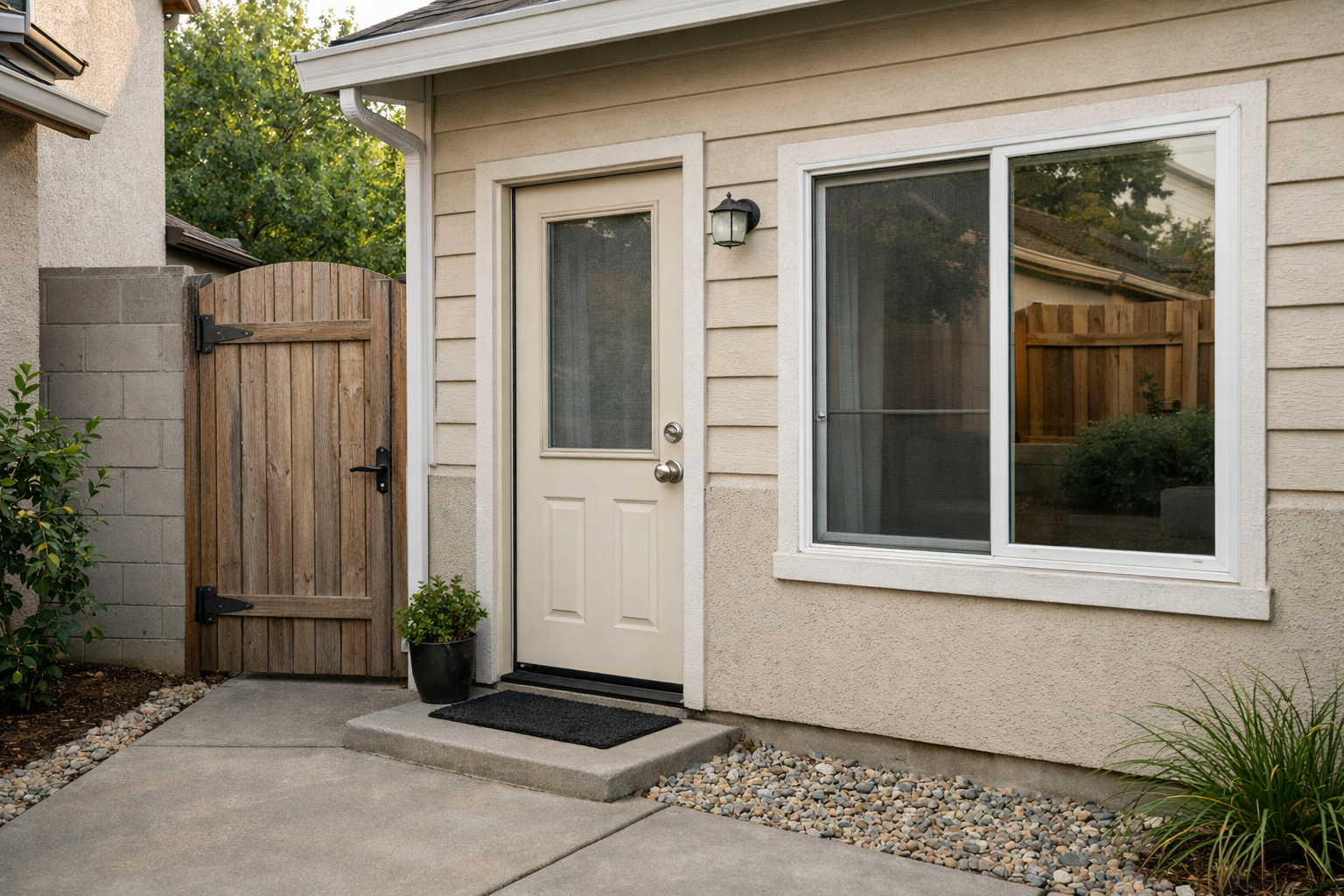
Doors. Windows. Screens. Side access.
You don’t feel alarmed.
You just feel drawn to check.
Micro-Moment 2 — The subtle resistance
You test a door or window the way you always do.
It’s locked.
But it doesn’t feel the same.
The handle has a little more play.
The latch catches slightly differently.
A screen flexes more than you remember.
Nothing is broken.
Nothing is open.
But something feels worked.
Micro-Moment 3 — Why this feels different
Forced entry leaves evidence.
Tested entry leaves doubt.
And doubt is harder to sit with.
Your brain searches for explanations:
- “These houses are old.”
- “That latch has always been a bit loose.”
- “I’m probably just paying more attention now.”
All of those might be true.
But your body is responding to patterned interaction, not imagination.
Micro-Moment 4 — What ‘testing’ usually looks like
Testing behaviour doesn’t try to get inside.
It tries to learn.
Common signs include:
- Multiple entry points checked lightly
- No damage, but repeated handling
- Focus on quieter doors, side windows, or rear access
- Screens or locks flexed but not broken
This isn’t a failure of your home.
It’s often a sign that someone was assessing risk — and moved on.
Micro-Moment 5 — The awareness habit
The habit that matters here is grounded and practical:
Check all entry points once, calmly, in good light.
Not repeatedly.
Not obsessively.
Just thoroughly.
That might include:
- Opening and closing doors to feel the latch engage
- Running your hand along window frames and screens
- Checking locks for looseness rather than damage
- Turning on lights to remove shadows and doubt
You’re not hunting for proof.
You’re restoring familiarity.
Micro-Moment 6 — Deciding what comes next
Once you’ve checked, the situation becomes clearer.
Either:
- Everything feels solid again — and your body settles
- One or two points feel questionable — and you take a next step
That next step doesn’t need to be dramatic.
It might be:
- Reinforcing a latch or tightening a fitting
- Adding light to a dark access area
- Making a note to address a weak point the next day
- Letting someone else know what you noticed
Preparedness here is about follow-through, not fear.
Micro-Moment 7 — Emotional aftermath
Later, people often reflect and say:
“Nothing was actually wrong — but I’m glad I checked.”
That’s not wasted energy.
That’s regulation.
When entry points feel familiar again, your nervous system relaxes.
When doubt disappears, so does the sense of being on edge.
✅ What “enough” looks like here
- You notice changes without assuming intent
- You distinguish “tested” from “forced”
- You check entry points once, calmly, in good light
- You take a practical next step if needed
- You feel relief after checking, not heightened vigilance
You didn’t ignore the signal.
You didn’t jump to conclusions.
You restored confidence in your space.
That’s how awareness protects a home — quietly.
🧘 Closing: Awareness Before Alarm
The most unsettling part of a potential break-in is rarely what happened.
It’s the uncertainty.
The quiet doubt that creeps in when something feels off but doesn’t quite rise to the level of proof. That uncertainty is what keeps people on edge — not danger itself.
Throughout this article, the pattern has been consistent:
- Small changes often appear first
- Those changes are easy to explain away
- Clarity comes from checking early, not worrying longer
Preparedness at home doesn’t mean assuming the worst.
It means noticing patterns, checking calmly, and restoring familiarity with your space before anxiety fills in the gaps.
Final reminder: You don’t need certainty to take a reasonable next step. You’re allowed to pause, check, and reinforce your space — without panic and without apology.
When your home feels familiar again, your body relaxes.
That’s not luck. That’s awareness doing its job.
🔗 Calm, Public-Safety-Aligned Guidance (Optional)
If you’d like additional, non-sensational guidance on recognising suspicious activity around your home, this resource aligns well with the principles in this article:
It reinforces the same approach: awareness, consistency, lighting, and early action — without fear-based messaging.
❓ Frequently Asked Questions
How do I know if my home was actually targeted?
You may not know for sure — and that’s okay. Repeated inconsistencies, tested entry points, or patterns across multiple days matter more than a single unexplained change.
Should I call the police if nothing is broken or missing?
If you notice repeated or escalating signs, it’s reasonable to report concerns. Early reporting helps establish patterns, even if no crime occurred.
Is it normal to feel unsettled even after checking?
Yes. Your nervous system may take time to settle after uncertainty. Restoring consistency and lighting usually helps that feeling pass.
What’s the fastest way to feel calm again?
Replace guessing with checking. Light your space, confirm entry points, and reset anything that feels off. Action restores clarity.